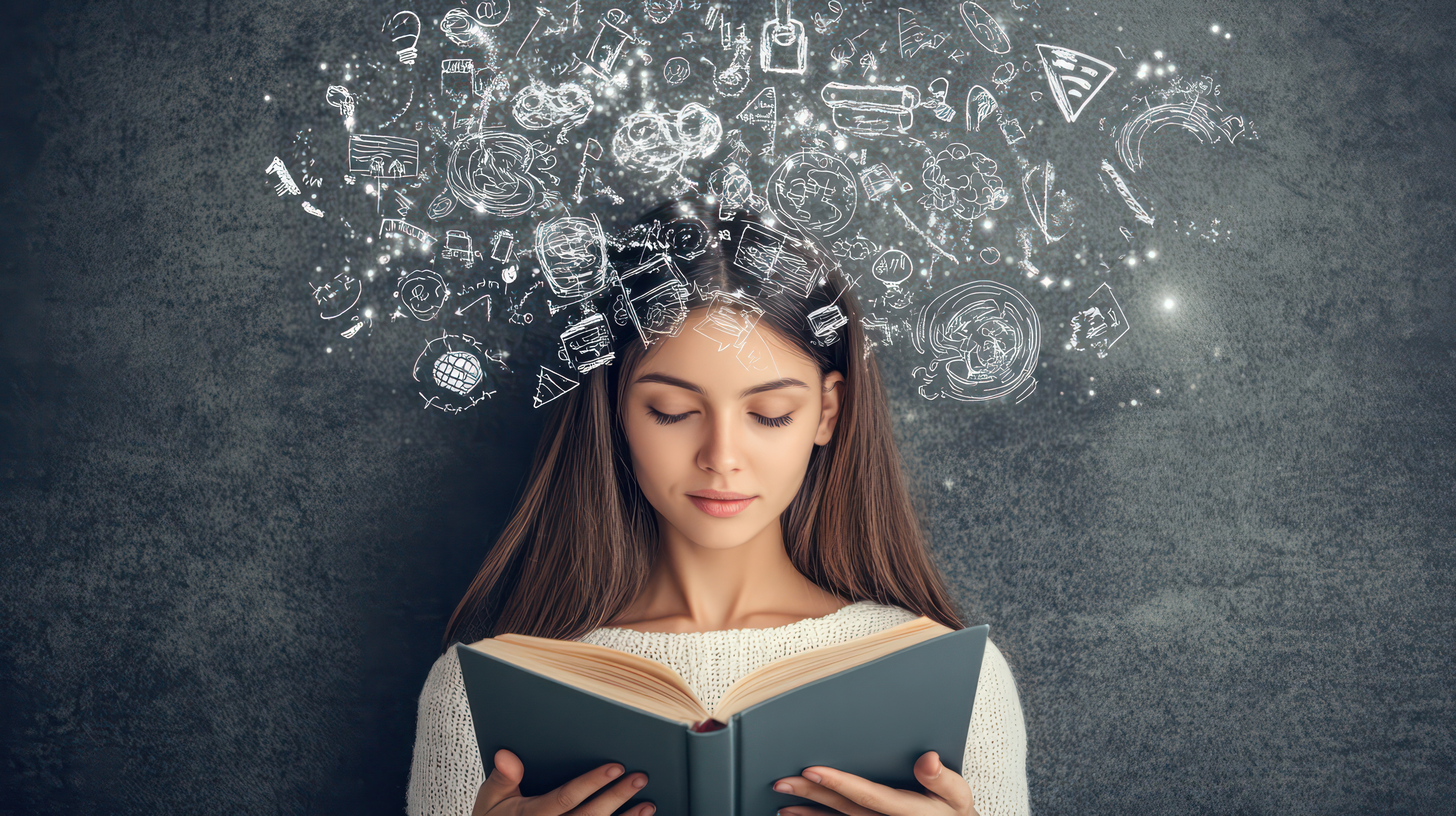
When I was reading Michael Harris’s I Have Forgotten How to Read, I recalled a TED Talk by Joshua Foer entitled Feats of Memory Anyone Can Do. Foer begins his talk with a rather odd request:
“I’d like to invite you to close your eyes. Imagine yourself standing outside the front door of your home…”
He then asks the audience to imagine “a pack of overweight nudists on bicycles.”
It’s an unusual way to open a TED Talk, but I do remember it—and that’s precisely the point.
Foer describes the “memory palace”, a technique which involves using places that are familiar and associating them with clear and strange images in order to aid our ability to remember things, since we generally recall information more effectively when we can form a mental image of it and connect it with something we know.
While reading Harris, I realized this idea could also apply to reading. Harris writes:
“Building vivid mental pictures is one of the most effective techniques for remembering anything, not least what we read. When you come across an important excerpt or concept, pause and visualize it. Make the picture as salient and distinctive as possible.”
This made me rethink what active reading really means, and I realized I have been doing this for some time without noticing.
Since seeing the TED Talk, I’ve been making a deliberate effort to visualise the things I’m reading. As I encounter an idea that catches my attention, I stop and form a mental image of it rather than just going on to the next paragraph. I’ve discovered that this small adjustment enables me to remember a great deal more of what I read. Rather than just processing the words on the page, I now give the information a concrete thing to link to in my memory.
Looking back, the link between Harris and Foer is clear. Foer shows us how to make memorable images on purpose, and Harris suggests we use this same approach when we read.
This is also related to the problem that Harris discusses; since we are constantly distracted and only rapidly going through texts rather than actually reading them, we never allow ourselves the time needed to form those connections.
Active reading isn’t about going faster or reading more. It’s about staying focused enough to remember what we read.
And if picturing nudists on bicycles helps me remember something, maybe that’s actually a good way to read.
Leave a Reply