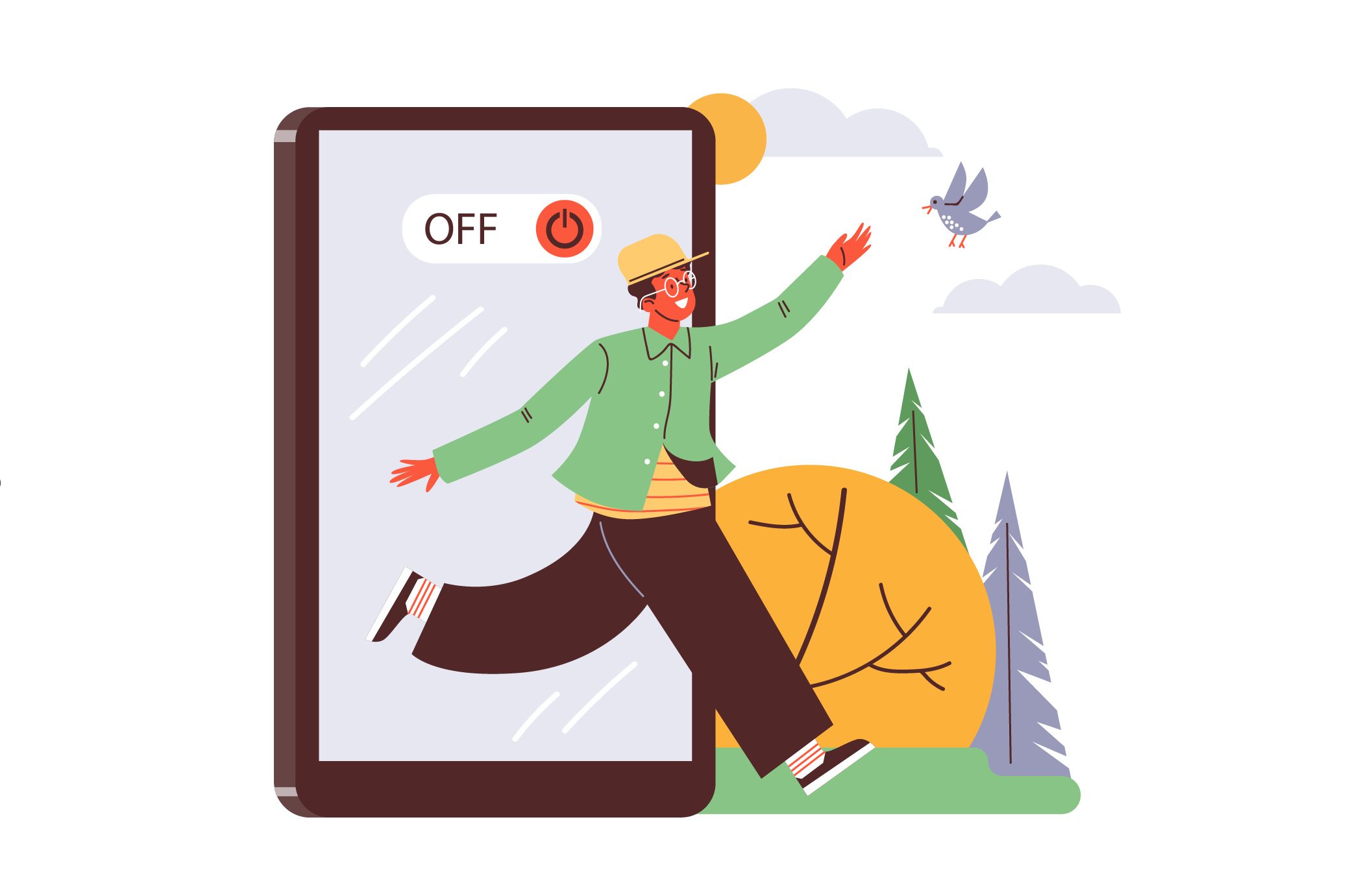
Most of my work happens online, including video, audio, photography, and graphic design. I’m currently doing a master’s in Digital Content Creation and Strategy. When one of our weekly modules asked us to do a five-day digital detox, I was curious to see how hard it would be. I thought giving up some digital habits would just be a small inconvenience, maybe make me a little bored or worried about missing out. I didn’t expect it to teach me much about my habits or affect my work.
I decided to stop using two things: YouTube and digital news.
I kept social media since I need it for work, so dropping Instagram wasn’t realistic. Instead, I picked platforms I use a lot but don’t need every day: YouTube and digital news. I mostly use YouTube for tutorials, not for client work, so I figured it would be easy to skip. I check news headlines out of habit, but I thought a week without them wouldn’t make much difference. This made me realize my digital use is more about habit and convenience than actual need.
But I was mistaken.
I soon realized how much I depend on YouTube for my creative work. Starting my master’s while also working on a big project meant I needed almost all my creative skills. Normally, I would use YouTube tutorials a lot.
The week became more difficult when DaVinci Resolve released a major update. I would usually watch videos to learn about the new features.
During the detox, I counted at least ten times when I wanted or needed to use YouTube.
Ten times, I went for YouTube.
But not once did I actually use it.
Instead, I found answers in documentation, articles, and forums. To my surprise, I didn’t miss the videos and avoided getting lost in the usual YouTube rabbit hole.
One tutorial leads to another, and before you know it, you’re watching something unrelated. Chapters 5 and 6 of Johann Hari’s Stolen Focus explain how platforms are designed to keep our attention. YouTube is a perfect example. I would start with a tutorial, but the recommendations always kept me watching. During the detox, looking for information elsewhere helped me avoid those distractions.
The news was a different experience altogether.
Giving up news turned out to be easier. The hardest part was breaking my morning habit of reading the New York Times. Every so often, I also found myself wanting to click on an interesting headline.
Other than that, not reading the news for a week proved liberating.
This experience showed me that a digital detox is not just about cutting out technology. It is also about becoming more aware of how digital tools shape our habits and attention. For creative people, taking a break from certain platforms can reveal how easily we lose focus to endless recommendations or news updates. Stepping away from even a few tools can help creatives regain control of their workflow and attention, making room for more intentional, productive work.
Leave a Reply