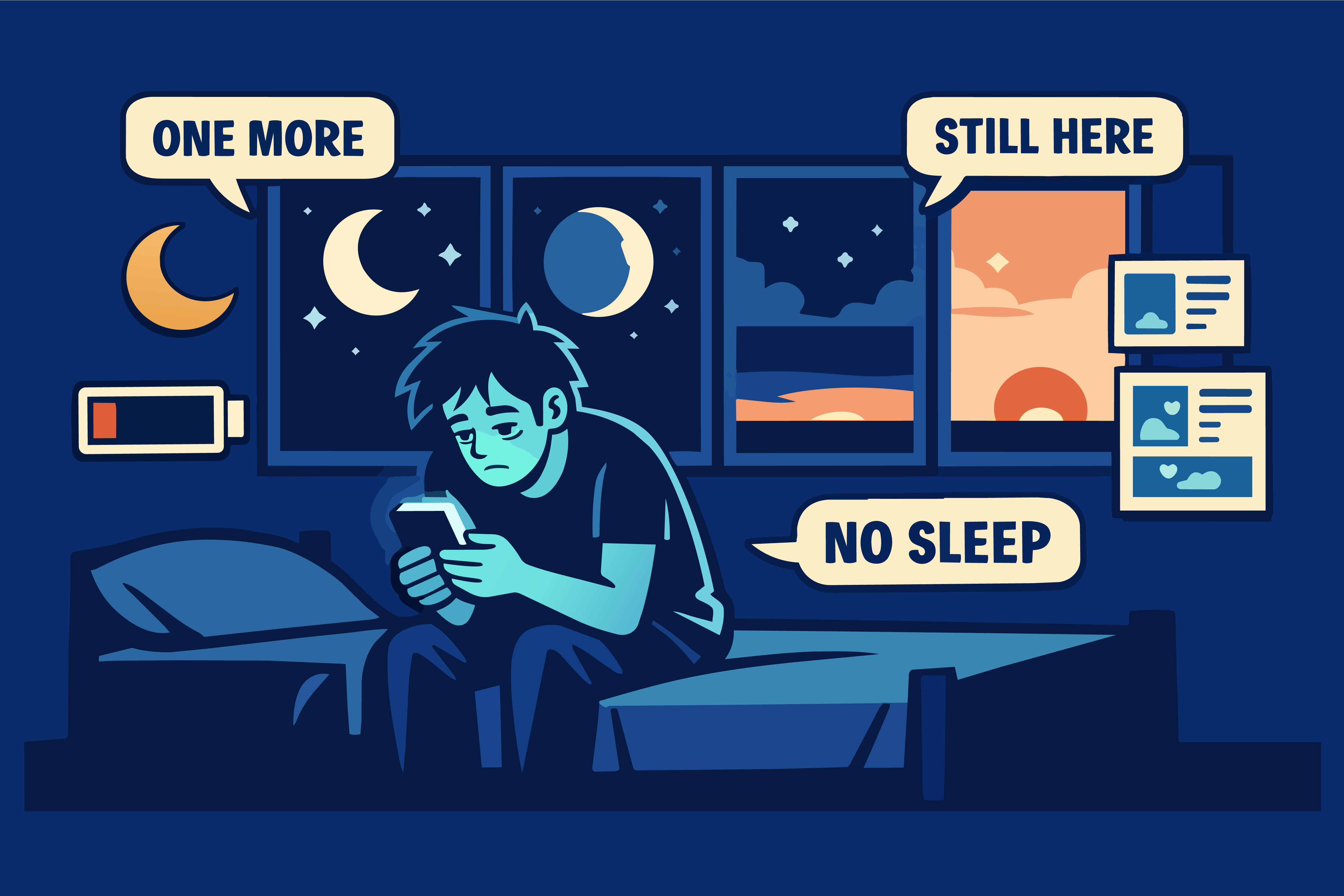
What if the main things distracting us on our phones aren’t really things we choose to see?
This idea stayed with me after I read Tristan Harris’s How Technology Is Hijacking People’s Minds. Harris, who used to work as a design ethicist at Google, explains how technology exploits predictable parts of our psychology to grab and hold our attention. What surprised me most is that many of these distractions don’t even feel like distractions. They feel like choices. (Medium)
Think about the notification badge on your phone. It might seem like you’re choosing to check it, but Harris compares this to playing a slot machine. You check because there could be a message, a like, an email, or maybe nothing. That uncertainty is often enough to keep us coming back.
The same thing happens with features like infinite scrolling and autoplay. There’s no clear stopping point. When you finish one video, the next one starts. When you reach the end of a feed, another post shows up. Instead of choosing to keep going, the next thing is already there.
The Ledger of Harms from the Center for Humane Technology goes even further, sharing research on how technology affects our attention, thinking, relationships, mental health, and how we process information. One statistic stood out to me: research in the Ledger found that people switch between different pieces of screen content about every 19 seconds, and 75% of what we see on screens is viewed for less than a minute. (Ledger of Harms)
That statistic made me reflect on my own creative work. I spend most of my day working on a computer, so I can’t just get rid of technology. I rely on video editing software, Photoshop, social media, email, YouTube, and many other tools. The real issue isn’t technology itself. It’s when the tools I use for creating start fighting for the same attention I need to actually be creative.
This ties in with what I’ve been learning from Johann Hari’s Stolen Focus. Staying focused isn’t just about having enough willpower to block out distractions. Sometimes we have to realize that our work environments are actually built to grab our attention.
There’s a constant battle for our attention, and most of the time, we don’t even notice we’re part of it. What I’ve learned is that focus isn’t just something we have or lack. It’s something we give away, often without noticing. Maybe the first step to protecting our attention is becoming more aware of what’s competing for it, and noticing when we’re making the choice and when something else is deciding for us.
Leave a Reply